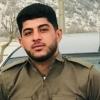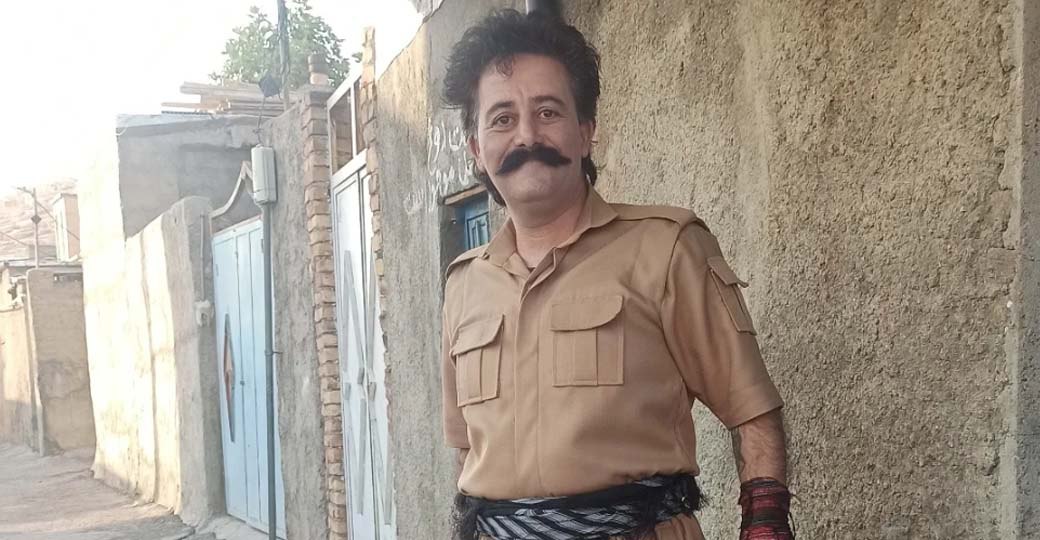
According to published reports and statements from local sources, Shahab Darabi, a Kurdish blogger and labor activist from Eslamabad-e Gharb in Kermanshah province, who had previously been sentenced to three years and one day in prison, was targeted in an assassination attempt by security forces of the Islamic Republic of Iran.
Reports indicate that after the attack he was severely injured and was taken by locals to Eslamabad hospital, where he is now in intensive care.
His condition is reported to be critical. Darabi became well known in recent years for his open support of nationwide truck drivers’ strikes and has repeatedly been pressured by security agencies for this reason.
Who is Shahab Darabi?
Shahab Darabi, known online by the pseudonym “Yuz Asia,” is one of hundreds of Kurdish activists who have bravely opposed the repressive and economic policies of the Iranian government. A truck driver by profession, he used social media to post videos and content highlighting the dire living conditions of drivers, to support nationwide strikes, and to criticize Iran’s sham elections.
His history of arrests shows the price that opponents of the silencing of free expression must pay: In March 2024, Darabi was arrested for criticizing Iran’s staged elections and the absence of real freedom of choice, and his Instagram account was blocked. Then, on May 27, 2025, during a wave of truck drivers’ strikes and solely for posting multiple videos in support of the strike, Iranian security forces raided his home and violently arrested him.
Shortly after, a court sentenced him to three years and one day in prison on charges of “insulting sanctities” and “spreading falsehoods.” These actions by the state, despite efforts to silence his voice, only increased his visibility and turned him into an inspiration for other civil activists.
Why Does the Islamic Republic Fear the Kurdish Movement?
The Islamic Republic of Iran views the national-democratic Kurdish movement — with its calls for freedom, equality, and the right to self-determination, as well as the defense of language and cultural rights — as a threat to its ideological unity and the continuity of its fascist rule.
The government believes that any insistence on mother-tongue education, local self-organization, or political rights — even within Iran’s existing system — could lead to discourses of separation or a weakening of centralized power. For this reason, Kurds have consistently faced repression, cultural censorship, the arrest of activists, and restrictions on civic institutions.
This hostility is not merely the result of national differences but stems from the regime’s fear of the growing strength of grassroots organizations among Kurds, which could serve as a model of resistance for other nations and strike at the heart of Iran’s authoritarianism.
The Kurdish national-democratic movement has had a profound and practical influence on other oppressed nations in Iran, sparking protest movements and demands for justice. This was especially visible during the “Woman, Life, Freedom” uprising, which began in Kurdish provinces and spread its slogans, methods, and symbols across the country, inspiring other oppressed nations.
Many protesters in Persian-speaking provinces, as well as in Baluchistan, Turkmen regions, and Azerbaijan, identified their demands for freedom, equality, and dignity in the Kurdish resistance and adopted them. In reality, Kurds have acted as the vanguard of the struggle against tyranny in Iran, and their voice of protest has drawn other ethnic groups and regions into unity and solidarity against the Islamic Republic.
This has been the secret of successive Iranian governments’ fear of the Kurdish freedom movement for over a century.
Kurdish Provinces Have the Highest Execution Rates in Iran
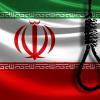
In Iran’s Kurdish provinces, reports of executions are particularly alarming. According to the Hana Human Rights Organization, at least 124 Kurdish citizens were executed in 2024, a number that only reflects cases the organization was able to document, meaning the real figure may be significantly higher.
The annual report of the Kurdistan Human Rights Network also noted that two Kurdish women political prisoners, Pakhshan Azizi and Verisheh Moradi, were sentenced to death, while several other Kurdish detainees from the “Woman, Life, Freedom” protests now face capital punishment.
Monthly reports by the Kurdistan Human Rights Network regularly record executions of Kurdish prisoners; for example, in February 2025, ten Kurdish inmates were executed in Ghezel Hesar Prison in Karaj, in Hamedan, and in Karaj Central Prison on charges ranging from “espionage” to “corruption on earth.” These figures demonstrate that the Islamic Republic systematically uses the death penalty in Kurdish provinces as a tool of pressure and repression.
Repression in Kurdistan and Media Censorship
In Iran’s Kurdish provinces, independent local media are virtually unable to survive. Images of protests, arrests, and repression are often circulated only by Kurdish media operating in exile.Persian-language media abroad, meanwhile, rarely highlight such stories — and when they do, they tend to downplay or marginalize them.
In practice, this makes them indirect collaborators in the Islamic Republic’s censorship of news about the arrests, torture, and disappearances of Kurdish activists. One of the main reasons why news of repression in Kurdistan is sidelined is not only state censorship but also the deep-rooted centralist and chauvinistic mindset among sections of Iran’s so-called intellectuals and political activists.
These groups, who for decades have portrayed themselves as representatives of a “united Iranian nation,” have in fact denied the diverse national identities of Kurds, Baluchis, and Arabs, and often see their struggles for freedom as a threat to the project of “national unity.” For this reason, when news emerges of the arrest or execution of Kurdish activists, many Persian-language outlets minimize it or remain silent, as acknowledging the reality of Kurdish repression would mean admitting the failure of the centralist narrative.
This attitude is even reproduced in some Persian-speaking human rights organizations abroad, where reports about Kurdistan or Baluchistan are often brief, delayed, and written in neutral or watered-down language.
This behavior stems from the same ideological residue that sees justice and freedom only through the lens of a mono-ethnic, mono-linguistic nation-state. The result is that the suffering of non-Persian nations is pushed aside. Ultimately, the hidden fascism within the supposedly democratic discourse of the Persian-speaking opposition reproduces, at the narrative level, the same discriminatory policies practiced by the Islamic Republic. Thus, Kurdish voices remain silenced under the dual weight of “state repression” and “intellectual denial.”
Report by: Shahram Mirzaei