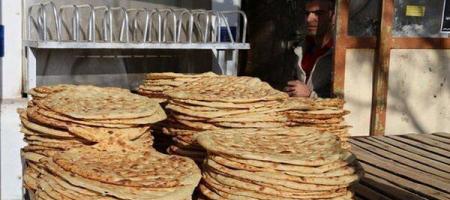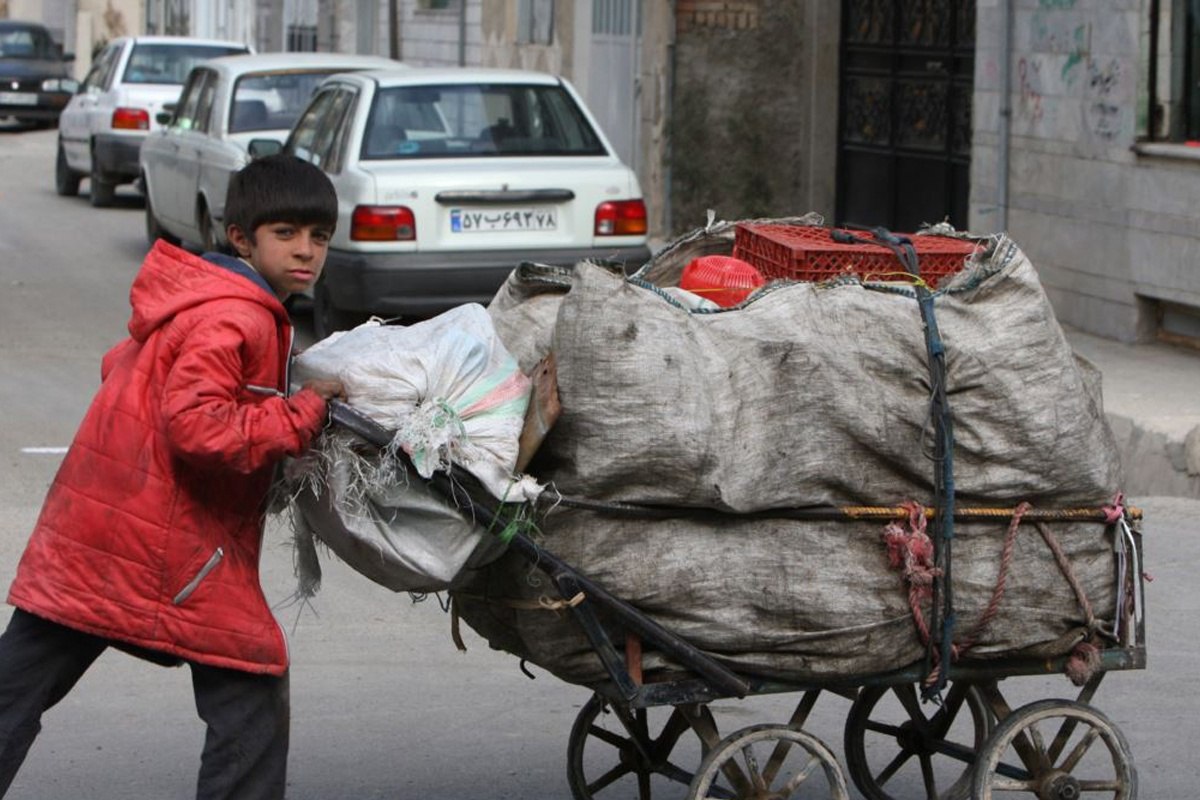
The Speaker of Parliament announced on Sunday, 26 Bahman, that according to official data, 34 percent of the country’s population is poor or experiencing absolute poverty.
Speaking during a public parliamentary session, he urged the Minister of Welfare to revise the income-decile classification system, stating that the current division is based on population size and “has no relation to people’s purchasing power or real economic conditions.”
He explained that the national welfare database groups citizens into eight clusters, adding that the first cluster—comprising the largest share of the population—includes poor individuals and, in some cases, those in absolute poverty, accounting for roughly three and a half income deciles.
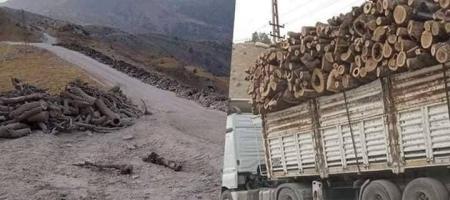
Deepened poverty in Iran’s western and Kurdish-populated provinces is attributed to a combination of long-standing deprivation, structural inequality, insufficient public investment, and limited development opportunities, which some analysts link to ethnic and regional marginalization.
High unemployment, the absence of large industries, widespread labor migration, weak healthcare and education infrastructure, and vulnerability to economic shocks have left many households facing not only income poverty but also a lack of services and opportunities.
Local economies in these areas depend heavily on informal work, low-productivity agriculture, or seasonal labor, while unequal access to the national job market has widened the development gap.
As a result, poverty has become not merely an economic condition but an intergenerational cycle that is extremely difficult to break without targeted social policies and sustainable development.