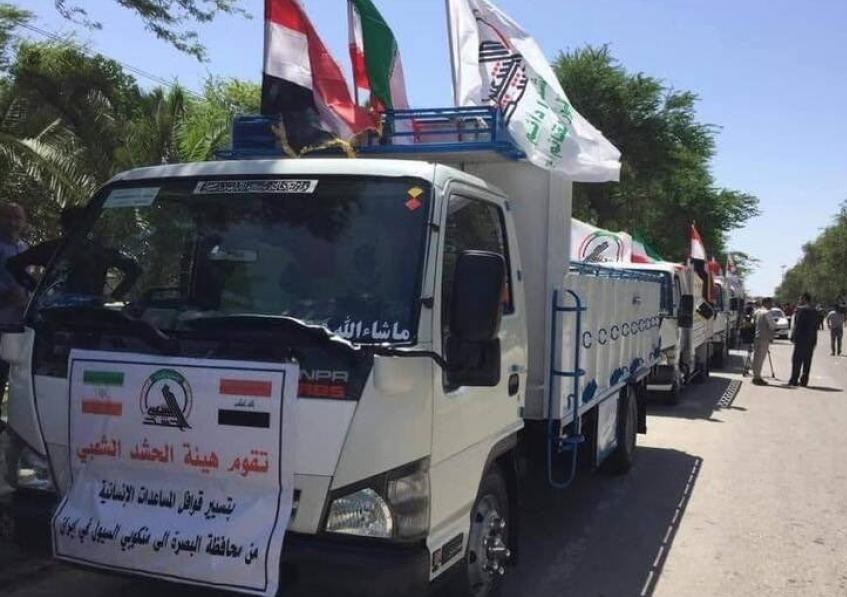
According to information received by Awatoday, a large number of Hashd al-Shaabi militants have entered Iranian Kurdistan and have been deployed in Qasr-e Shirin.
The report adds that a number of these forces have entered the area along with their families, including women and children.
Local sources say that Hashd al-Shaabi members wear civilian clothing while moving around the city or leaving their places of deployment—an action that appears aimed at concealing their military identity and reducing public sensitivity.
The visible family movements of these forces have raised serious concerns about regional security and the consequences of the presence of foreign militias in border areas.
The relationship between the Islamic Republic of Iran and Hashd al-Shaabi (the Popular Mobilization Forces of Iraq) is a deep, strategic, and multi-layered one, which has expanded significantly since the group’s formation in 2014 and is now considered one of the main pillars of Tehran’s regional influence in Iraq.
From the outset, Iran played a key role in organizing, strengthening, and directing Hashd al-Shaabi by providing financial, military, training, and intelligence support. Senior commanders of the IRGC Quds Force, particularly Qassem Soleimani, played a central role in coordinating operations, training forces, and creating cohesion among the group’s various factions.
Many of the main Hashd al-Shaabi factions are ideologically and politically aligned with the Islamic Republic and follow Iran’s “Axis of Resistance” doctrine, which seeks to expand regional influence, counter the presence of the United States and its allies, and exert direct influence over Iraq’s security and political decision-making.
In practice, this support has transformed Hashd al-Shaabi from a temporary paramilitary force into a powerful actor with extensive influence within Iraq’s security, economic, and political structures, to the extent that some of its branches play a direct role in internal Iraqi affairs and regional tensions.
Critics argue that the dependence of parts of Hashd al-Shaabi on Iran has undermined Iraq’s national sovereignty and turned the country into an arena for proxy conflicts, while the Islamic Republic justifies its support within the framework of “security cooperation” and “counterterrorism.”