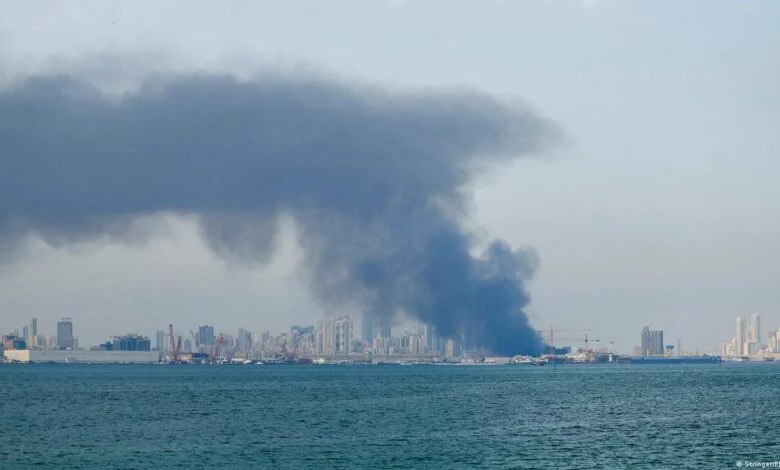
Flight cancellations, postponed travel plans, and rising uncertainty have cast a dark shadow over the Middle East’s tourism industry, which in recent years had become one of the world’s most popular travel destinations.
Nazih Rawashdeh, a tour guide near Irbid in northern Jordan, said sadly: “My last group of tourists left the country three days ago, and all tours scheduled for March have been canceled.” He added that this is disastrous because the summer tourism season is just beginning, even though Jordan remains calm and secure.
Around the world, travel companies are trying to find solutions for tourists stranded in the region.
In France, Alain Capestan, head of Comptoir des Voyages, said their priority is to return travelers safely to their home countries.
He added that the war has also affected global travel because cities such as Dubai, Abu Dhabi, and Doha serve as major international transit hubs.
In Germany, travel companies Alltours, Dertour, and Schauinsland-Reisen announced that they will cover accommodation costs for tourists stranded in the Middle East. They also canceled all trips to the United Arab Emirates and Oman at least until March 7, 2026.
The UK travel association ABTA stated that no tourists will be sent to the region until the UK Foreign Office lifts its “do not travel” warning.
The war has paralyzed a tourism sector that experienced unprecedented growth in 2025. According to the United Nations, nearly 100 million tourists visited the Middle East in 2025, accounting for about 7% of global tourism.
This represented a 39% increase compared with the period before COVID-19.
The research center Oxford Economics warned that the economic shock this time could be more severe because tourism now contributes a larger share to regional GDP and employment.
Helen McDermott, director of global forecasting at the center, said tourism to the Middle East in 2026 could decline by 11% to 27%, meaning 23 to 38 million fewer international visitors and financial losses estimated between $34 billion and $56 billion.