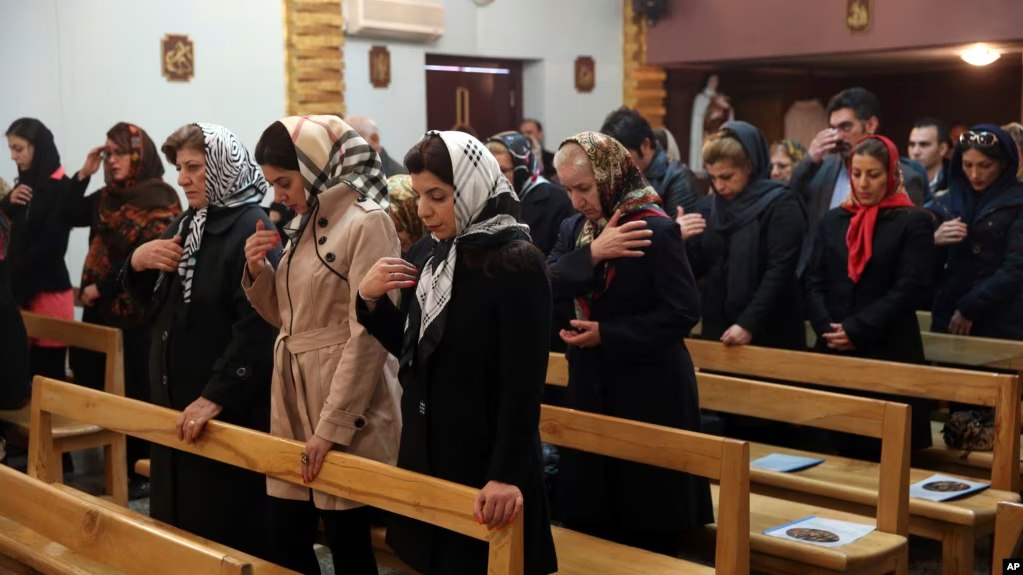
The Chair of the United States Commission on International Religious Freedom (USCIRF) has stated that the Islamic Republic has continued its severe repression of religious minorities during the recent crackdown on popular protests.
Vicky Hartzler, Chair of the bipartisan commission appointed by the U.S. Congress to monitor violations of religious freedom worldwide, said on Tuesday in an interview with Voice of America that the commission’s findings show Tehran continues to exert intense pressure on religious minorities.
Hartzler made these remarks on the sidelines of the International Religious Freedom Summit in Washington, an annual conference whose organizers told Voice of America that approximately 1,500 activists from 87 countries participated this year.
In the interview, she said:
“What the government is imposing on its own people, including religious minorities, is horrific and brutal.”
She added:
“Due to the internet shutdown, access to accurate information is very difficult. But we believe that the government is repressing Christians, Baha’is, and other religious minorities alongside other citizens. This is deeply concerning.”
On January 8, as part of a broad crackdown on protests that had begun on December 28, the Islamic Republic cut off internet access across the country. These restrictions were partially and tightly eased last week, allowing some Iranian human rights activists abroad to regain limited access to information from inside Iran.
Sardar Pashaei, an Iranian Kurdish human rights activist and director of the U.S.-based human rights group Hiva, told Voice of America on Monday, on the sidelines of the same summit:
“Now that we can gradually contact some individuals, we are realizing that the situation is truly horrifying.”
He added:
“Because Iranian cities have been militarized by security forces, obtaining information is extremely difficult. But through the contacts we have, we know that widespread arrests of activists have taken place, and many people are searching for their loved ones and are unable to find them.”
Pashaei also said that his group has received images of the protest crackdown from activists who, despite the risk of arrest, used brief opportunities of limited internet access to send these materials.
He explained:
“We try to disseminate these images as widely as possible, provide them to major media outlets, add English subtitles, send them to policymakers, and publish the information.”
In a statement provided to Voice of America by the U.S. Department of State, a spokesperson said Iran is one of 13 countries designated as a “Country of Particular Concern” for violations of religious freedom—a designation that allows the United States to impose sanctions on perpetrators of such violations.
Mark Walker, Senior Advisor at the U.S. State Department for International Religious Freedom, also told Voice of America on Wednesday, as the religious freedom summit concluded at the U.S. Capitol, that he plans to release a report on these 13 countries in the coming weeks.
Walker said:
“Religious persecution taking place in the Middle East, particularly in this specific case in Iran, is deeply concerning.”
He added:
“Even some of the recent video footage we have seen has been extremely disturbing. I know that President Donald Trump and our Secretary of State, Marco Rubio, are closely monitoring the situation.”
Other countries designated by the United States as Countries of Particular Concern for violations of religious freedom include Myanmar, China, Cuba, Eritrea, North Korea, Nicaragua, Nigeria, Pakistan, Russia, Saudi Arabia, Tajikistan, and Turkmenistan.