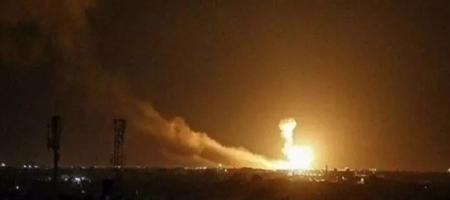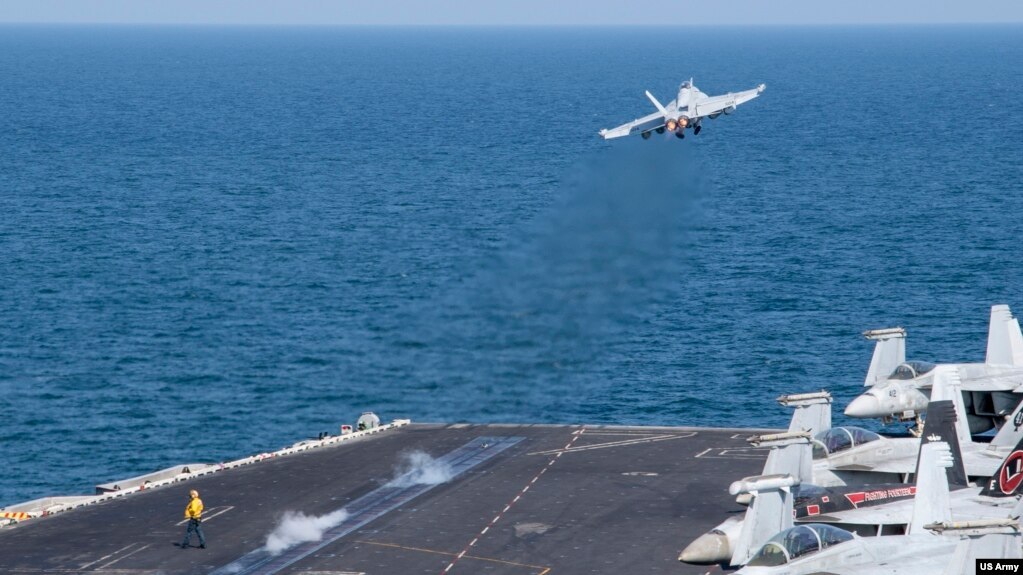
The U.S. Central Command (CENTCOM) has confirmed that it launched a new wave of strikes against targets in Iran on the evening of July 16, marking the sixth consecutive night of military operations.
CENTCOM announced the operation in a brief post on X, but has not yet released details regarding the locations or nature of the targets.
Meanwhile, Iran's state broadcaster reported explosions in Bushehr, Bandar Abbas, Qeshm, and Ahvaz.
The semi-official Fars and Tasnim news agencies, both affiliated with the Islamic Revolutionary Guard Corps (IRGC), reported that Iranshahr Airport in Sistan and Baluchestan Province and a bridge in Bandar Khamir were among the targets of the latest U.S. strikes.
Other media outlets also reported attacks on a railway communications station in Bandar Abbas and on a bridge linking Bandar Abbas and Lar.
Amid these developments, White House Press Secretary Karoline Leavitt said during a press briefing that Tehran has continued negotiations with the United States and remains interested in reaching an agreement.
She said Iran's willingness to negotiate was the result of the "devastating blows" delivered by the U.S. military.
Supporting that assessment, Mohammad Bagher Ghalibaf, Speaker of Iran's Parliament and head of the Iranian negotiating delegation, said in a statement released on July 15 that although Iran was engaged in an "existential war" with the United States, Tehran would continue negotiations with Washington despite the renewed fighting.
Leavitt also described Iran's continued attacks on commercial vessels in the Strait of Hormuz as "acts of terrorism." She noted that "under the memorandum of understanding they signed, they were not supposed to fire on ships transiting the Strait of Hormuz."
She added: "The President cannot simply sit back and allow these terrorist acts to occur. He must ensure that Iran faces the consequences of its actions."
The latest round of hostilities between Tehran and Washington began less than a month after the signing of the Islamabad Memorandum of Understanding, following Iranian attacks on commercial vessels that refused to use the route designated by the IRGC near Larak Island while transiting the Strait of Hormuz.
For nearly a week, the U.S. military has carried out strikes against Iranian military positions in the south and, at times, the north of the country. In response, Iran has launched missiles toward several Arab countries in the region, claiming that it is targeting only U.S. military bases located in those countries.