According to reports received by Avatoday, following the murder of Eliya Zadeh-Hossein, his family is enduring severe hardship and trauma. Eliya’s uncle told Avatoday that the boy’s father, overwhelmed by the psychological shock of this tragedy, has lost his ability to speak and was transferred to hospital due to his deteriorating physical and mental condition.
Eliya Zadeh-Hossein, a 9-year-old boy from Rasht, was abducted on the evening of August 3 while playing in the Hamidiyan neighborhood. The perpetrator, a 38-year-old man who reportedly worked in satellite installation and as a school transport driver, lured Eliya into his car with the promise of giving him a cable for play. He then raped, brutally assaulted, and murdered the child before leaving his body abandoned in a public area.
It must not be forgotten that the Islamic Republic itself is the largest perpetrator of violence against children and bears primary responsibility for the killing of the children of Iran’s nations. In recent years, Iran has witnessed a series of horrific incidents that have underlined the pervasive lack of safety for children.
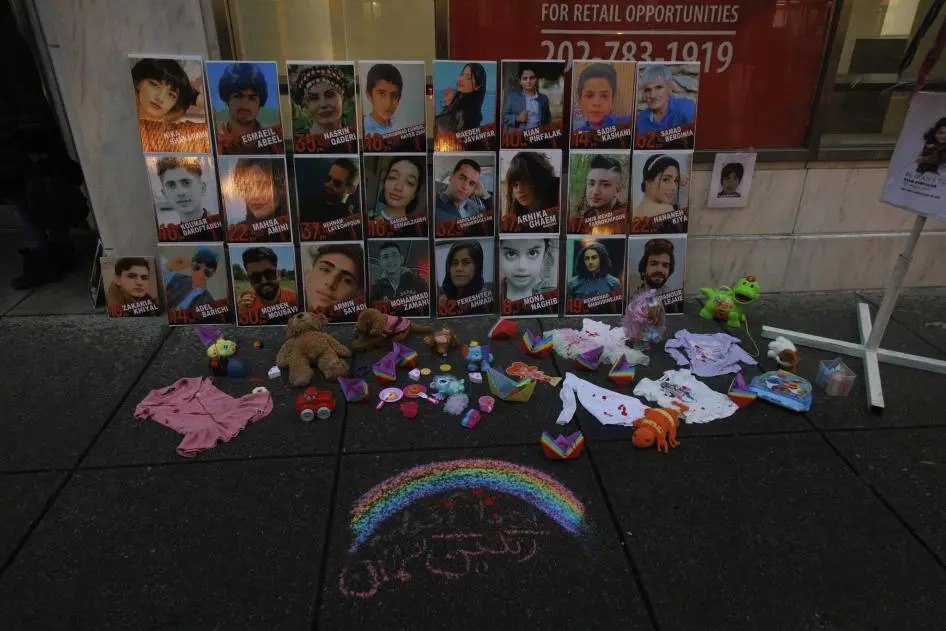
According to credible international organizations, during the mass protests of 2022, at least 70 minors under the age of 18 were killed by security forces due to direct gunfire or severe beatings. No independent judicial investigations were launched into these killings.
Furthermore, the execution of juvenile offenders—such as the case of Mehdi Jahanpour, a 16-year-old executed in Shiraz prison—demonstrates the continuation of a policy in blatant contradiction with international conventions on children’s rights.
Equally shocking are the so-called “honor killings” carried out by family members, such as the murder of 17-year-old Fatemeh Soltani by her father in Eslamshahr, which provoked widespread public outrage across social media and news outlets.
These patterns, combined with the state’s official silence and lack of transparency, have deepened public dissatisfaction and fueled condemnation from civil society and human rights organizations.
In an exclusive interview with Avatoday, a social psychologist based in Iran, speaking under the pseudonym “Zagros”, explained:
“When the government itself becomes the principal agent of violence, it directly and indirectly sets the behavioral model for society.”
He added:
“The Islamic Republic, through extensive repression, public executions, and the killing of protesters—including children—sends a clear psychological message to society: violence is a legitimate tool for solving problems. Such a message not only creates deep fear and insecurity in the collective psyche but also encourages individuals at lower levels of society to resort to violence in resolving family conflicts and personal disputes.”
From a psychological perspective, Zagros emphasized that when state authority is built on violence, society undergoes a process of “violence conditioning.”
He continued: “Ongoing economic pressures, restrictions on individual freedoms, and widespread social repression by the state generate chronic stress and feelings of powerlessness within families and communities. This environment provides fertile ground for crime and atrocities such as child murder.”
According to Zagros, insecurity produced by government actions amplifies feelings of helplessness and distrust in official institutions, thereby reproducing a top-down cycle of violence.
“In today’s Iran, the absence of psychological and social security is directly linked to the government’s performance. When citizens—especially children and adolescents—feel unsafe at home, at school, and in society, constantly exposed to poverty, discrimination, repression, and violence, their most basic human need for safe and stable development is destroyed. From a psychological standpoint, a society that loses security inevitably faces the collapse of trust, the spread of psychological trauma, and the reproduction of violence. In such a context, the state becomes not the protector of security, but its principal threat.”
The psychologist further underlined that even the perpetrators themselves are products of the system:
“A regime that, for decades, has governed through public executions, bloody crackdowns, systemic discrimination, and the institutionalization of violence effectively creates the mental and social conditions for that same violence to be reproduced. Individuals who commit murder grow up in an environment stripped of humane upbringing, social support, and psychological safety—an environment shaped daily by state violence. In this sense, the murderer is not an anomaly but a natural outcome of a system that has normalized violence and embedded it into everyday life.”
Report and Interview by: Shahram Mirzaei