Since history can remember, the Middle East has been the center of endless wars and conflicts. Intolerance, a tyrannical culture, successive coups, the rule of paramilitary groups, the rule of religion, cultural genocide, the massacre of national minorities, the forced displacement of minorities, and dozens of other tragedies that have targeted human dignity and turned this part of the world into a real hell.
The continued insecurity and the killing of national or religious minorities by Islamist groups or centrist governments in the Middle East have caused some citizens of these countries to flee to free countries and seek refuge there from the last century to the present day.
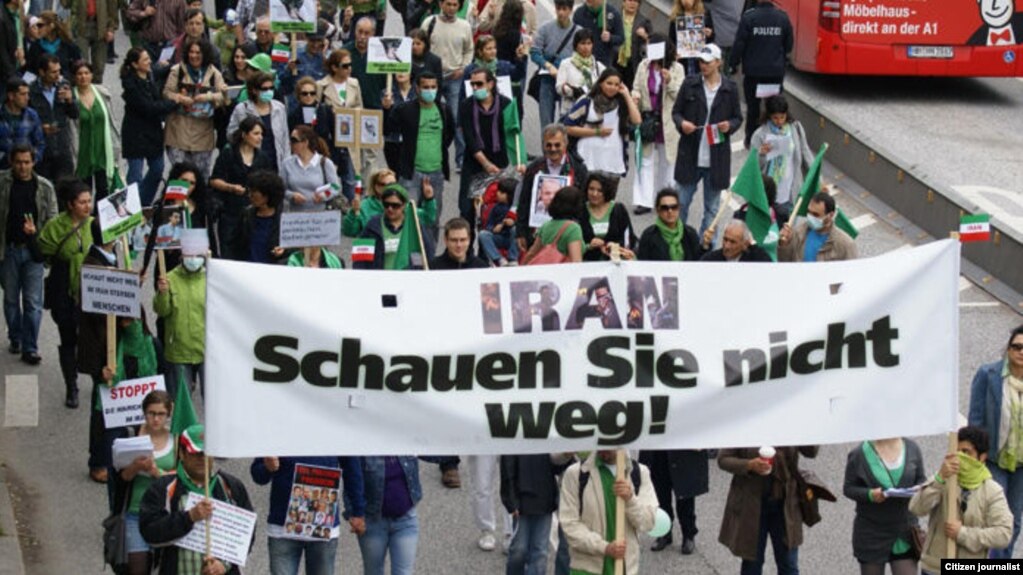
Especially with the coming to power of the Islamic Republic in Iran in 1979, and the beginning of a new round of killings of citizens, especially Kurds and Baluchis, and the spread of terror in the region by the Islamic Revolutionary Guard Corps and the formation of several terrorist groups by this organization, a large part of political and even cultural activists were forced to seek refuge in Europe, activists who were one step away from death and had no choice but to leave Iran and seek refuge in a free and democratic country.
According to a report by Deutsche Welle, in 2023 alone, more than 350,000 people applied for asylum in Germany. The largest number of asylum seekers were from Syria, Turkey, Afghanistan, Iraq, and Iran. Of these, more than 10,000 applications were related to Iranian citizens.
With the beginning of the "Woman, Life, Freedom" movement, a significant number of Iranians have sought refuge in Europe due to increased political pressures, human rights violations, and a sharp increase in executions. But this was not the end of the problems for the refugees, many of whom are facing a long and uncertain process in various European countries to process their asylum cases.
Restrictions on access to the labor market, housing problems, and difficulty in benefiting from health and social services are also among the most important challenges that Iranian refugees face.
In addition to these problems, numerous reports have been published of continued threats and security pressures from elements related to the Iranian government, even in Europe. With such a situation, Iranian political refugees, especially journalists, cannot feel 100% safe even in Europe.
In this regard, the British Domestic Intelligence Service (MI5) has announced that since January 2022, it has responded to 20 Iran-related plots that have posed a threat to the lives of British citizens. In January 2024, the United Kingdom imposed sanctions on Iranian officials who, according to officials, have played a role in threatening and attempting to kill journalists on its territory.
Masoud Mirzaei, a Kurdish political activist from Kermanshah and also an activist in the field of women's rights, said in an exclusive interview with Avatoday about the problems faced by Kurdish and Iranian refugees: "Learning a new language, integrating into the culture and accepting new laws, getting in touch with the locals, finding a suitable language class, work and apartment, as well as the difficulty of buying essential household items and proper food are among the main and fundamental problems that every refugee faces in the first few years and greatly affect his body and mind. These problems can cause all kinds of psychological stress and even mental disorders." Masoud Mirzaei, whose life was in serious danger from Iranian security forces, was forced to flee Iran in 2017 and made his way to Turkey. In 2018, he entered Greece and was finally able to enter Germany in 2021 and apply for asylum, overcoming many difficulties. He is now working as a " Manufacturing and Production's Technology, machine toolsTop of Form
" as a project manager in a reputable German company. He can be considered an example of a successful Kurdish-Iranian refugee who was able to learn German at an advanced level in a short time and start working as an engineer in a German company.
In response to the question of how he sees the situation of Kurdish and Iranian refugees in Germany, he said: "Iranian and Kurdish refugees have generally been able to integrate into German society and lead a normal life. This is because they were forced to leave Iran under pressure from the Islamic Republic of Iran, and most of these people also have appropriate education or a widely used specialty. These factors have made integration easier for Iranian and Kurdish refugees, and as we see, this group quickly learns the language and finds work and can communicate with German citizens sooner."
However, the situation of Kurdish and Iranian refugees in Europe is not uniform. Some countries, considering the specific conditions of Iran and the increase in internal repression, handle Iranian refugee cases with greater sensitivity, and if accepted, they are provided with access to broader educational, health and social services. In contrast, a large number of Iranians remain in limbo awaiting the final decision of immigration authorities, a situation that exposes them to psychological, economic, and social harm.
Various studies also show that a significant percentage of Iranian refugees and immigrants in Europe struggle with serious mental health problems. Stress from adapting to the host culture has also been reported to be a major factor in the emergence of depression and mental disorders among them. A systematic review of the mental health status of refugees in the European Union also shows that despite the high need, the use of mental health services among this group is very low, and barriers such as language, lack of awareness of available services, cultural taboos, and differences in help-seeking patterns prevent them from effectively accessing these services.
Masoud Mirzaei has made extensive use of art to express his beliefs and disgust with the terrorist activities of the Islamic Republic of Iran and even other radical Islamist groups. Over the past years, he has expressed his protest against the terrorist activities of Iran and other Islamist groups by drawing caricatures of Islamic figures and concepts. I asked him about the pressures on refugees in Germany, to which he replied: "There is a lot to talk about this question. Among them, we can mention the pressure of integration, which includes the process of learning the language, looking for a job, finding an apartment, being accepted into the host society, for example being accepted as a colleague at work, decisions by the BAMF office, etc. In general, any basic need alone can put serious psychological pressure on a refugee, who is in a very sensitive and fragile situation. These pressures and problems can be a fatal challenge for immigrants."
According to academic research and documentary reports, Kurdish political refugees in Europe face a set of difficulties that are not limited to general migration problems, but are also rooted in their ethnic and political identity. Studies published in reputable journals show that many of these refugees struggle with legal uncertainty and the length of the asylum process, which prevents them from fully accessing public services and the labor market. At the same time, the problem of inadequate housing and employment is among their main challenges, and the economic pressures, coupled with being away from their homeland and separated from their families, cause serious psychological damage. Research has also emphasized that Kurdish refugees sometimes face discrimination and greater security sensitivities in host societies due to their history of political activism or simply their ethnic affiliation. On the other hand, their connection with the Kurdish diaspora and the political situation in the Middle East also affect their lived experience in Europe, such that their social integration can be examined not only at the local and national levels, but also in transnational and political dimensions.
This set of circumstances has caused the lives of Kurdish and Iranian political refugees in Europe to be accompanied by complex layers of legal, social, economic and psychological problems.
Report: Shahram Mirzaei