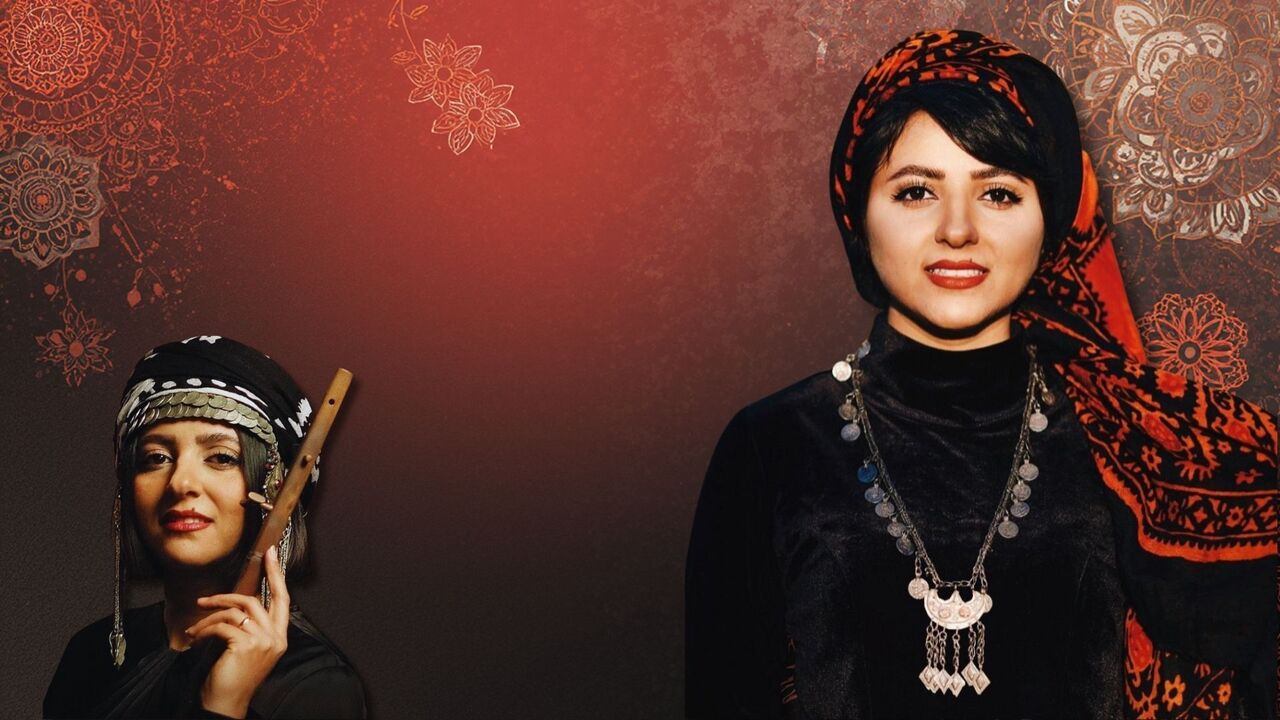
According to published reports, Yalda Abbasi, a well-known Kurdish artist and dotar player from Shirvan in North Khorasan, who resides in Germany, was arrested in Mashhad by forces of the Islamic Republic’s Intelligence Ministry after traveling to Iran to visit her family and was transferred to Vakilabad Prison in the city.
Reports indicate that this artist was targeted for repression due to her activities related to the “Woman, Life, Freedom” movement, and that a one-year prison sentence had previously been issued against her in absentia.
Throughout the rule of the anti-human governments of the Pahlavi dynasty and the Islamic Republic over Kurdistan, Kurdish artists have been among the groups systematically targeted by repression and pressure.
This repression has not been limited to cultural and linguistic restrictions but has extended to arrests, arbitrary detentions, heavy prison sentences, and even torture.
Government authorities have forced Kurdish singers and musicians to perform state-sponsored anthems instead of their own cultural works and to delete content related to Kurdish culture from social media—actions widely condemned as violations of freedom of expression and attempts to erase Kurdish cultural identity.
In addition, reports point to numerous arrests of Kurdish artists across different provinces. The arrest of Nima Mandoumi is one such example.
Nima Mandoumi, a violinist from Kamyaran, was arrested by Intelligence Ministry forces in Alborz Province and transferred to an unknown location. Despite his family’s efforts to follow up, there is still no information about his fate.
In some cases, Kurdish artists have even faced corporal punishment; for example, Arman Shadivand from Darreh Shahr in Ilam Province was sentenced to two years in prison and 30 lashes.
This ongoing pattern of repression, which has been condemned by international human rights bodies, is part of a broader policy aimed at restricting the cultural and linguistic freedoms of national minorities in Iran and has had a profound impact on the artistic and cultural community of Kurdistan.