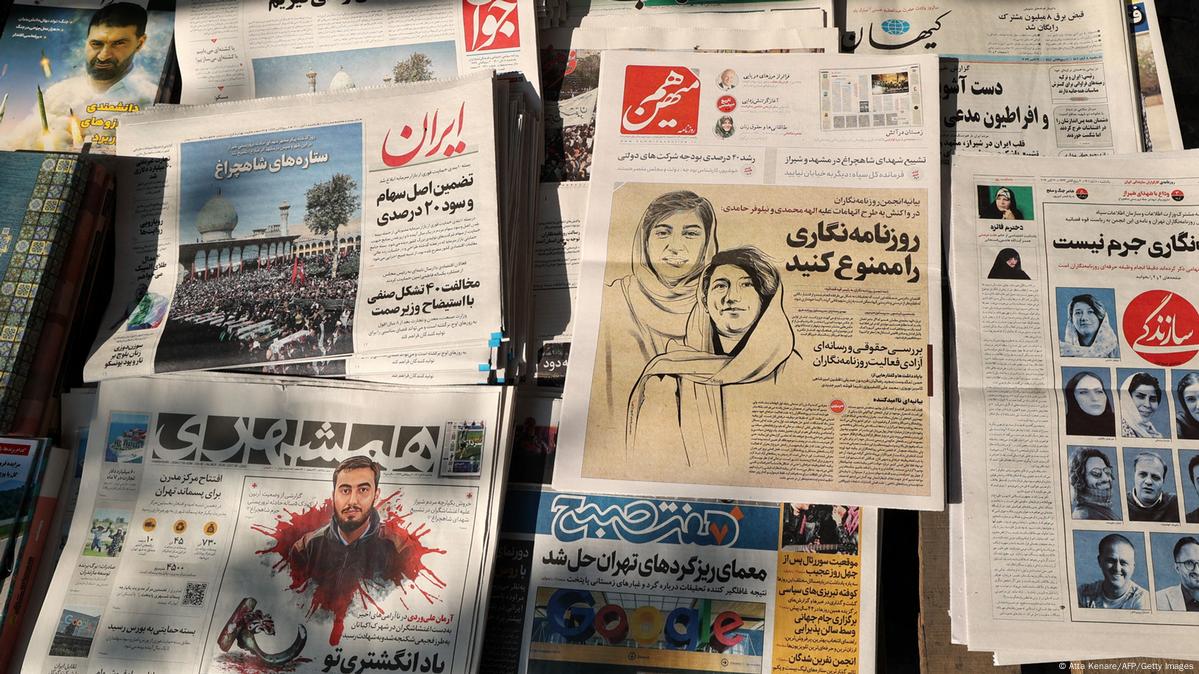
The Iran Human Rights Center, in a report published on Wednesday, September 3, documented an unprecedented escalation in the repression of media and journalists across the country. The report includes a comprehensive list of arrests, summonses, and judicial actions against journalists this year, alongside an in-depth interview with a female journalist inside Iran who described the current conditions of reporting in the country.
According to the center, Iran remains one of the most dangerous countries in the world for media professionals. Critical and independent journalists are “subjected to threats, security surveillance, the sealing of offices, arbitrary arrests, and judicial persecution.”
Hadi Ghaemi, the center’s executive director, stated: “Imprisoning independent journalists is a central strategy of the Islamic Republic to silence dissent and maintain power. The international community must raise its voice for those in Iran who sacrifice their livelihood and freedom to tell the truth.”
At present, at least 21 journalists are imprisoned in Iran. The country ranks 176th out of 180 in global press freedom, one of the worst positions in the world.
The report covers detentions and pressures from the beginning of 2025 to date, during which dozens of journalists and media workers have been summoned, imprisoned, or forced to abandon their work. A long list of affected individuals is included, among them: Saeedeh Shafiei, Soltan Ali and Farshid Abedi, Mansour Iranpour, Omid Faraghat, Meysam Rashidi, Iraj Pashapour, Azdar Piri, Mohammad Parsi, Mandana Sadeghi, Kourosh Karampour, and Farzaneh Yahya-Abadi.
Arrest of Photojournalists and Citizen Reporters
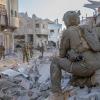
During the 12-day war between Iran and Israel, Iran’s Ministry of Intelligence announced the arrest or summons of 98 people on suspicion of collaborating with Persian-language media abroad, without providing evidence or revealing their identities.
Among them were groups of photojournalists. Several stated that during the conflict, security forces treated them as “bait.” Veteran photographer Majid Saeedi remarked: “We were not heroes; we were targets. We were hunted.” Security agents warned him by phone: “Do not leave your house. You will be arrested again.”
Last month, the Tehran Journalists’ Association office was forcibly shut down. According to its president, Akbar Montajabi, the closure was politically motivated and aimed at weakening independent journalism. In a statement, the association stressed: “The forced eviction of the association’s office is not merely a dispute over a building; it is an outright attack on professional independence, freedom of journalistic activity, and pluralism in society.”
The statement added that closures of institutions such as the House of Humanities Thinkers, the Iranian Sociological Association, and now the Journalists’ Association should not be seen as “isolated incidents,” but rather as “part of an ongoing trend that will soon extend to other independent organizations and associations.”
Interview With a Female Journalist
In a comprehensive interview with the center, a female journalist from northeastern Iran explained that obtaining a media license is effectively only possible for those with no record of opposition to the state. She said: “All media are under the supervision of the Ministry of Culture and Islamic Guidance and state broadcasting. After obtaining a license, an intelligence officer unofficially monitors both the outlet’s activity and the private lives of individuals.”
She added that in the online sphere, establishing a fully independent news agency is virtually impossible. While some personal news websites exist, they are small in scale, heavily monitored, and strictly censored.
Regarding print media—newspapers, weeklies, and monthlies—she emphasized that the process is “even more restrictive” and that “only those without any history of challenging or criticizing the government can get through the filters and obtain permits.”
According to her, state agencies monitor other aspects of journalists’ lives as well: “Their social lives, political activities, and all public interactions are under the gaze of security institutions.”
She explained that in such an environment, working as a journalist determined to remain independent, resist state pressure, and uphold professional ethics is extraordinarily difficult—almost impossible. She recounted personal experiences where, “after publishing sensitive pieces, journalists were repeatedly warned, and if they did not follow the ‘recommendations’ of the Ministry of Culture, direct warnings from security agencies followed, ultimately leading to the revocation of media licenses.”
Media Blackout During the War
During the 12-day war, the journalist witnessed a total media blackout. She said none of the official outlets “reported the war as it truly was. No one wrote about the suffering of the people. No outlet covered public opposition to Iran’s entry into such a conflict. No media reported the number of destroyed homes, the displaced families, or the failure of responsible institutions to respond.”
She added: “No one was allowed to write about it, just as no one was allowed to take photographs. As you saw in the news, many photographers were arrested. Numerous journalists who tried to report, write stories, or document what happened to people during those 12 days were arrested, and their cameras confiscated.”
‘Control Increased a Thousandfold’
Although media repression in Iran was already severe prior to the war, she said that during the conflict, “control increased a thousandfold.” Many journalists, under such pressure, “could no longer continue their work. They could not accept being forced into silence or compelled to write in favor of the government. Because they refused to bow to such humiliation and sell their pens, they were forced to leave their homeland and migrate against their will.”
The report concludes that through such heavy-handed repression of the media, the Islamic Republic not only violates freedom of expression and the right to free access to information but also forces journalists into silence, prison, or exile.